




 English
 Español
 Français


Tea harvesting is delicate work. Pick too hard, and the leaves bruise. Pick too slow, and the leaves age on the bush. Small farms in hilly terrain have an extra problem. Power lines do not reach every terrace. Gasoline tools are heavy and noisy. A lithium battery tea harvest system solves this. Lightweight battery packs power hand-held harvesters. Workers move freely between rows. No cords. No fuel cans. No pull starters.
What Lithium Battery Tea Harvest Means for Small Farms
Battery-powered harvesters replace gas engines and manual clipping
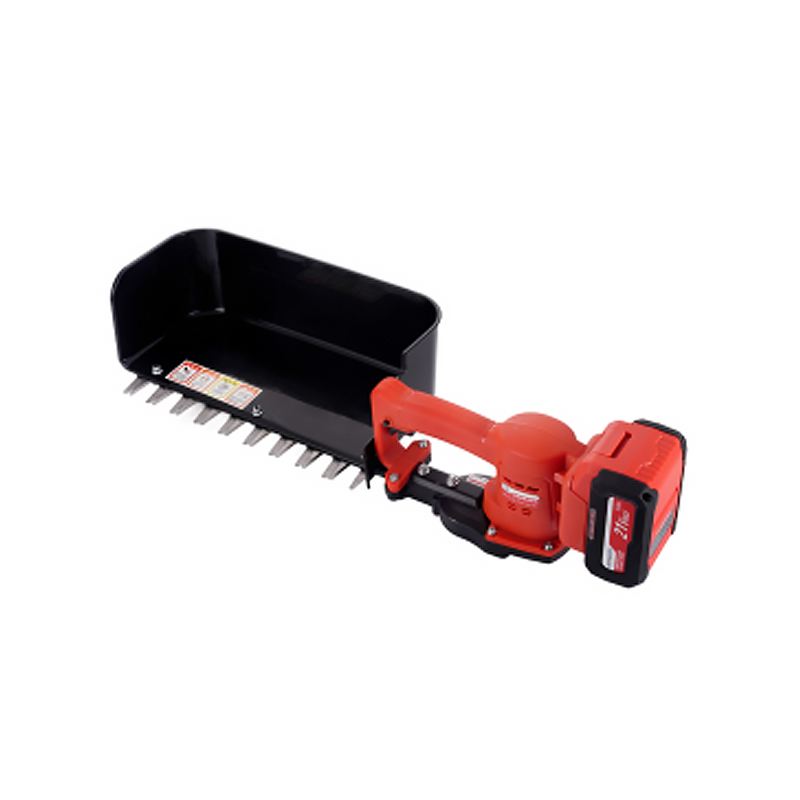
A lithium battery tea harvest setup typically includes a hand-held harvester and one or more battery packs. The harvester has a reciprocating blade or a rotating drum with fingers that pull leaves off the stem. The worker holds the harvester against the tea bush and moves along the row. The battery hangs from a waist belt or mounts on the harvester.
Manual clipping is slow. Gas engines are heavy — 6 to 8 kilograms. A lithium battery harvester weighs 3 to 4 kilograms. Workers last longer. They pick more leaves per hour. A lithium battery tea harvest system can double the daily harvest per worker compared to manual clipping.
Battery voltage and capacity determine how long the harvester runs
Most lithium battery tea harvest systems use 36V or 48V battery packs. Higher voltage means more power. But higher voltage also means heavier batteries. A 36V system with a 4Ah battery might run for 2 to 3 hours. Enough for a morning shift. Swap batteries at lunch. Keep working.
Battery capacity is measured in ampere-hours (Ah). More Ah means longer runtime. But more Ah also means more weight. A 6Ah battery runs longer but feels heavier on the waist. A lithium battery tea harvest system needs the right balance for your workers and your shift length.
Why Lithium Batteries Work Better Than Other Options
Lithium batteries hold their charge between shifts better than lead-acid
Lead-acid batteries lose charge when sitting. Leave a lead-acid pack for a week, and it is half empty. Lithium batteries hold charge for months. For seasonal tea harvest, the lithium battery tea harvest system sits in storage between flushes. Pick it up when the leaves are ready. The batteries still have charge.
Lithium also works better in hot temperatures. Tea farms in tropical regions see 35 degrees Celsius or higher. Lead-acid batteries degrade in heat. Lithium handles heat without losing capacity as quickly.
Fast charging keeps the harvest going without long breaks
A lithium battery tea harvest system charges in 1 to 2 hours. Lead-acid takes 8 hours. A worker finishes a morning shift. The battery goes on the charger during lunch. By the time the worker returns, the battery is ready. Two batteries per worker is enough for a full day.
Here is what a lithium battery tea harvest system needs to work well on a small farm:
- Battery packs that swap easily without tools
- Chargers that work from standard wall outlets or portable generators
- Batteries sealed against moisture and dust
- Comfortable waist belts or backpacks for carrying batteries
- What to Look for in a Lithium Battery Tea Harvest System
- Battery life needs to cover a full shift without running out
Calculate your harvest time per day. A small farm might pick for 4 hours. A larger operation might pick for 8 hours. Choose a lithium battery tea harvest system with batteries that last your full shift. Or plan for a battery swap mid-day.
Cold weather reduces lithium battery performance. Tea grows in high-altitude regions where mornings are cold. A lithium battery tea harvest system used at 5 degrees Celsius will have shorter runtime than at 25 degrees. If you harvest in cold weather, buy extra batteries.
The harvester needs to cut cleanly without damaging new growth
The cutting mechanism matters. Reciprocating blades work like electric hair clippers. They cut cleanly but need sharpening. Rotary fingers pull leaves off without cutting stems. They are gentler on the bush but may miss some leaves.
Test a lithium battery tea harvest system before buying a fleet. Take the harvester to your field. Pick a row. Check the leaves for bruising or tearing. Look at the bush after harvest. Does it look ragged or clean? The right harvester leaves the bush ready for the next flush.
Maintenance and Repair Considerations
Blades need regular sharpening and replacement
A lithium battery tea harvest system has moving parts that wear. Blades dull after many hours of cutting. Dull blades tear leaves instead of cutting them. The tea looks brown at the cut edge. Quality suffers.
Ask the supplier about blade life. How many hours between sharpenings? Are replacement blades available? How much do they cost? A system with cheap, available blades is better than one with expensive, hard-to-find parts.
Batteries degrade over time and eventually need replacement
Lithium batteries lose capacity with age and charge cycles. A lithium battery tea harvest battery might last 500 charge cycles before dropping to 80 percent capacity. After that, runtime gets shorter. The worker stops more often to change batteries.
Factor battery replacement into your operating budget. A battery that costs $150 and lasts 3 years costs $50 per year. Better than gasoline at $10 per day. But still a cost you need to plan for.
Small tea farms face labor shortages. Workers are harder to find and more expensive. A lithium battery tea harvest system makes each worker more productive. One worker with a battery harvester picks as much as three workers with hand clippers. The batteries are quiet. No fumes. No pull cords. For farms that are too small for big machinery but too large for hand clipping, lithium battery harvest is worth a look.
