




 English
 Español
 Français


Walk through any tea plantation during harvest season. You won't hear the roar of gas engines or see plumes of exhaust. What you'll hear instead is a quiet hum—battery-powered harvesters gliding across the rows, powered by lithium batteries. Behind those batteries stands a lithium battery tea harvest factory, a facility that assembles the power packs that keep tea plucking machines running through long picking seasons without the fumes, noise, or fuel stops that traditional equipment demands.
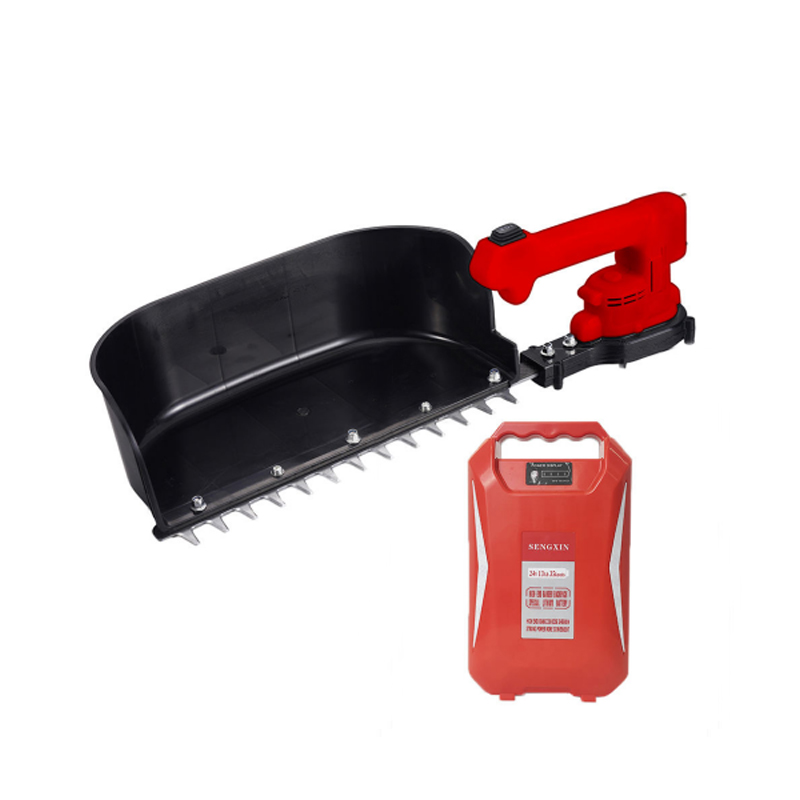
What a Tea Harvest Battery Does
It powers the cutting mechanism all day long
Tea harvesters run continuously for 6 to 8 hours per day during peak season. The battery must deliver steady voltage to the motor that drives the cutting blades. A lithium battery tea harvest factory produces batteries with enough capacity—typically 20Ah to 40Ah—to handle a full day of work without recharging mid-shift.
It's lightweight enough for workers to carry
Tea pickers carry the harvester on their backs or shoulders. Weight is a real concern. A 5-kilogram battery makes a long shift tolerable. A 10-kilogram battery breaks backs and slows production. A lithium battery tea harvest factory uses lightweight lithium-ion cells, typically weighing half of what a lead-acid equivalent would weigh for the same capacity.
It withstands humidity and temperature swings
Tea plantations are damp. Morning dew, afternoon mist, and occasional rain mean water gets everywhere. A lithium battery tea harvest factory seals battery packs against moisture and designs thermal management systems that keep cells safe in temperatures from near-freezing mornings to 35°C afternoons.
Why Lithium Beats the Alternatives
Lead-acid is too heavy and short-lived
A lead-acid battery with similar capacity weighs 10 to 12 kilograms. That extra weight matters when workers carry it for 6 hours straight. The cycle life is also poor—barely 300 charge cycles before capacity drops. A lithium battery tea harvest factory delivers packs that weigh under 5 kilograms and run for 1,000 cycles or more.
Gas engines are loud, dirty, and costly
The old way was small gas motors on backpack harvesters. They spewed exhaust into the tea leaves, annoyed workers with constant noise, and required oil changes, spark plugs, and fuel runs. Switching to lithium means quieter plantations, cleaner leaves, and lower operating costs. A lithium battery tea harvest factory enables that switch.
How the Factory Builds the Battery
Selecting and matching cells
Not all lithium cells are suitable for harvesters. The factory chooses cylindrical or prismatic cells with high discharge rates—typically 18650 or 21700 format. Cells are tested for internal resistance and capacity, then matched into groups. A lithium battery tea harvest factory rejects mismatched cells because they cause imbalance and reduce pack life.
Assembling the pack with proper protection
Cells are welded into series-parallel configurations. A Battery Management System is installed to monitor voltage, current, and temperature. The BMS prevents overcharge, over-discharge, and short circuits. A lithium battery tea harvest factory pays special attention to the BMS programming, setting cutoffs that match the harvester motor's draw profile.
Packaging for field conditions
The assembled pack goes into a rugged plastic or metal housing. Seals and gaskets keep moisture out. Vibration dampening prevents cell damage from the constant motion of harvesting. A lithium battery tea harvest factory tests every pack for water ingress and drop resistance before shipping.
The Sizes and Configurations in Demand
Backpack batteries for walk-behind harvesters
Many common configuration—10S or 14S lithium-ion packs in a comfortable backpack format. Output ranges from 36V to 48V, capacity 20Ah to 30Ah. A lithium battery tea harvest factory produces these in high volume, with shoulder straps and quick-disconnect cables.
Handheld battery packs for pruning shears
Smaller format, 18V to 24V, 4Ah to 6Ah. These power electric pruning shears for selective plucking of premium leaves. The packs are compact and easy to swap. A lithium battery tea harvest factory offers hot-swap capability so workers can change batteries without stopping for long breaks.
Fixed battery systems for ride-on harvesters
Large plantations use ride-on harvesters that require bigger packs—48V to 72V, 100Ah to 200Ah. These are the same technology but scaled up. A lithium battery tea harvest factory builds these with active cooling and more robust BMS for the higher current draw.
What Makes a Reliable Tea Harvest Battery
Cycle life and capacity retention
The battery must deliver reliable runtime after hundreds of charge cycles. A good factory tests packs for capacity retention at 300 and 500 cycles. The drop should stay under 20%. Poor quality cells lose half their capacity within a year.
Weather resistance
IP65 rating is the small for plantation work—dust-proof and protected against low-pressure water jets. A serious lithium battery tea harvest factory goes to IP67 for some customers who work in heavy dew or occasional rain.
Charger compatibility
The factory should provide matching chargers with appropriate current and voltage. Fast charging can reduce downtime during lunch breaks, but it must be paired with proper BMS thermal protection. A lithium battery tea harvest factory that understands the full system—battery plus charger plus harvester—delivers better results.
Field service and spare parts
Harvest batteries face rough conditions. Connectors break, housings crack, BMS boards fail. A reliable lithium battery tea harvest factory stocks replacement components and offers repair services. Quick turnaround during harvest season matters more than price.
A lithium battery tea harvest factory produces the power source that has quietly transformed tea picking. The good ones build lightweight packs with proper cell selection, robust BMS protection, and weather-sealed housings. They offer multiple voltages and capacities for different harvester types. They test for cycle life and water resistance. The result is a battery that runs a full shift, charges fast, and lasts for seasons. Choose a factory that treats a harvest battery as the essential tool it is—because when the tea is ready, there's no time to wait for a charge.
