




 English
 Español
 Français


Concrete placement requires proper consolidation to achieve structural integrity. Foundation pours. Column casting. Slab construction. Precast production. Without effective vibration, concrete contains voids and honeycombing. An inserted concrete vibrating rod delivers the consolidation performance required for quality concrete placement. It provides high-frequency vibration that removes entrapped air. It ensures uniform compaction around reinforcement and into forms. It makes concrete stronger, denser, and more durable.
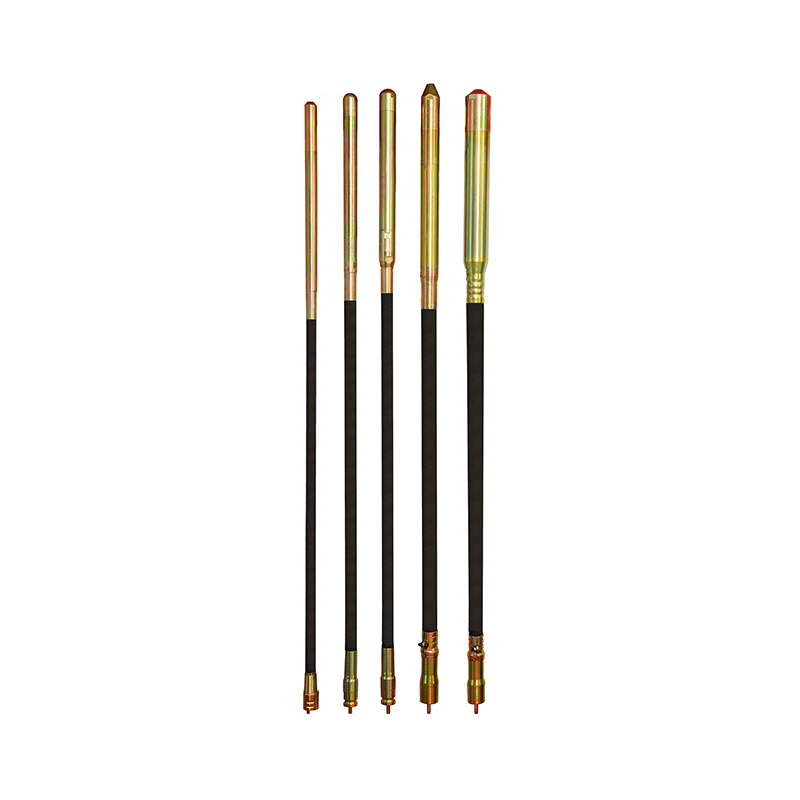
How Vibrating Rods Consolidate Concrete
The vibrating rod creates high-frequency oscillations that fluidize concrete
Fresh concrete has internal friction. An inserted concrete vibrating rod generates rapid oscillations that temporarily reduce concrete viscosity. The material flows like a liquid. Air bubbles rise and escape. The concrete compacts around reinforcement.
The vibration causes aggregate particles to settle into a dense matrix
Proper compaction requires particle rearrangement. An inserted concrete vibrating rod causes aggregate to settle into the most stable arrangement. The voids are filled. The density increases. The concrete achieves its design strength.
The insertion and withdrawal pattern affects consolidation quality
Systematic vibration is essential. An inserted concrete vibrating rod is inserted at regular intervals. The rod is held in place for the appropriate duration. The concrete compacts fully. The surface finish is smooth.
Key Features of Professional Vibrating Rods
The vibration frequency determines consolidation efficiency
Different concrete mixes require different frequencies. An inserted concrete vibrating rod operates at frequencies from 50Hz to 200Hz. The frequency matches the aggregate size. The consolidation is effective. The concrete is densified.
The rod diameter must suit the reinforcement spacing
Tightly reinforced sections require smaller rods. An inserted concrete vibrating rod is available in diameters from 25mm to 75mm. The rod fits between rebar. The vibration reaches the entire section. The consolidation is complete.
The construction withstands continuous use in demanding conditions
Concrete work is physically demanding. An inserted concrete vibrating rod is manufactured with robust materials and sealed construction. The housing resists concrete abrasion. The motor is protected. The rod operates reliably.
Typical specifications for inserted concrete vibrating rods:
- Diameter: 25mm, 38mm, 50mm, 60mm, 75mm
- Frequency: 50Hz to 200Hz
- Motor power: 0.75kW to 2.2kW
- Voltage: 110V or 230V
- Rod length: 1m to 6m (flexible shafts)
- Cable length: 5m to 15m
- Features: flexible shaft, sealed motor, quick-change connections
Where Inserted Concrete Vibrating Rods Are Used
Building and foundation construction
Foundations and columns require proper consolidation. An inserted concrete vibrating rod is used for all vertical concrete pours. The rod compacts the concrete. The structure is strong. The building is safe.
Bridge and infrastructure projects
Heavy concrete sections demand thorough compaction. An inserted concrete vibrating rod is used in bridge piers and abutments. The rod reaches deep sections. The concrete is dense. The infrastructure lasts.
Precast concrete manufacturing
Precast elements require consistent quality. An inserted concrete vibrating rod is used in casting beds and moulds. The rod compacts the concrete uniformly. The product is defect-free. The precast elements meet specifications.
Residential and commercial slab construction
Flatwork requires consolidation near edges and penetrations. An inserted concrete vibrating rod is used for slab-on-grade pours. The rod compacts the concrete around utilities and edges. The slab is durable. The surface is smooth.
Choosing the Right Vibrating Rod for the Job
The rod diameter must match the reinforcement spacing
Tight spacing requires smaller rods. An inserted concrete vibrating rod should be selected based on the pour's rebar configuration. The rod fits between obstructions. The vibration reaches all areas. The consolidation is complete.
The frequency must suit the mix design
Different mixes require different frequencies. An inserted concrete vibrating rod should be specified for the concrete's aggregate size and slump. The frequency consolidates the mix effectively. The air is removed. The strength is achieved.
The rod and shaft must be durable for the expected usage
Concrete work is hard on equipment. An inserted concrete vibrating rod should have robust construction and replaceable wear parts. The rod lasts for many pours. The maintenance is manageable. The investment is protected.
The power source must match the site conditions
Sites have varying power availability. An inserted concrete vibrating rod should be selected for the available voltage and power supply. The rod operates at the required performance. The work proceeds without interruption.
An inserted concrete vibrating rod is an essential tool for concrete quality. But it determines whether a structure achieves its design strength or develops defects. It decides whether the project passes inspection or requires remediation. Choose a rod with appropriate diameter, suitable frequency, durable construction, and proper power configuration. Your concrete will be strong. Your structures will be durable. That is the purpose of an inserted concrete vibrating rod. To make concrete consolidation effective and reliable.
