




 English
 Español
 Français


Tea picking is delicate work. Leaves bruise easily. Pick too hard, and the leaf is damaged. Pick too slow, and the leaves age on the bush. A cordless tea picker changes the equation. It runs on batteries. No gas engine. No power cord. The worker moves freely between rows. Here is what buyers should know.
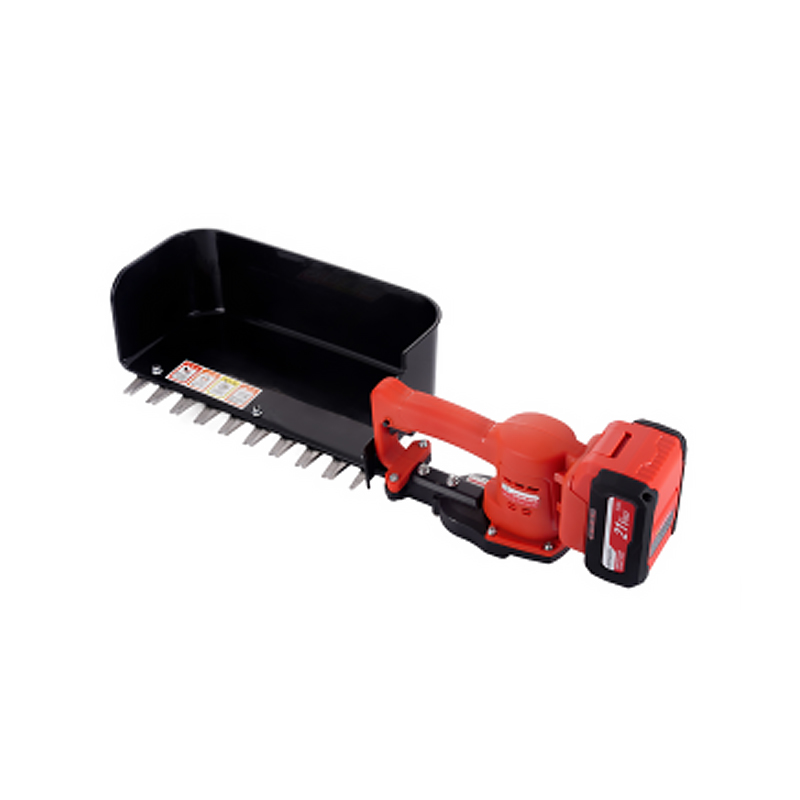
What a Cordless Tea Picker Does
The picker clips leaves from the bush
A cordless tea picker has a cutting head with reciprocating blades or a rotating drum. The blades clip the leaves off the stem. The leaves fall into a collection bag. The worker moves along the row. The picker does the cutting.
The cutting action is fast. A worker with a cordless picker picks more leaves per hour than someone picking by hand. The quality is consistent. The leaves are cut cleanly.
The battery powers the motor
The motor runs on a rechargeable battery. The battery is usually lithium-ion. It is lightweight. It holds a charge. A cordless tea picker runs for several hours on one battery.
The battery mounts on the picker or on a waist belt. A belt-mounted battery reduces the weight in the worker's hands. The picker is lighter and easier to use.
Where Cordless Tea Pickers Get Used
Small farms with hilly terrain
Large machines cannot climb hills. A cordless tea picker works on slopes. The worker walks between rows. The picker does the cutting.
Organic tea farms
Gasoline engines leak oil. Oil touches the leaves. The leaves are ruined. A cordless tea picker has no oil. No leaks. No contamination.
Farms that want to reduce labor costs
Hand picking is slow. A worker picks a few kilograms per hour. A cordless tea picker picks more. Fewer workers. Lower labor costs.
Here is where a cordless tea picker makes sense:
- Small farms — hills, narrow rows, no large machinery
- Organic farms — no oil leaks, no fuel fumes
- Labor shortages — one worker with a picker replaces several workers
- Premium tea — consistent cut, less bruising
What to Look for in a Cordless Tea Picker
Battery voltage and capacity
Higher voltage means more power. A cordless tea picker with 36V or 48V has more cutting force. It handles thicker stems. A 24V picker is lighter. It is fine for tender leaves.
Capacity is ampere-hours (Ah). More Ah means longer runtime. A 4Ah battery runs 2 to 3 hours. A 6Ah battery runs 4 to 5 hours.
Cutting width
Wider cutters pick more leaves per pass. A cordless tea picker with a 40cm cutting width covers more ground. A 30cm cutter is for tighter rows. The farmer chooses based on row spacing.
Weight
The worker holds the picker all day. A heavy picker tires the arms. A cordless tea picker should weigh 3 to 4 kilograms with the battery. Lighter is better.
Collection bag capacity
The leaves need to go somewhere. The collection bag holds the leaves. A cordless tea picker with a larger bag means fewer stops to empty. The worker stays in the row longer.
Here is what to check in a cordless tea picker:
- Battery — 36V or higher, 4Ah or larger
- Cutting width — matches row spacing
- Weight — under 4 kg with battery
- Bag capacity — larger is better
A cordless tea picker makes tea picking faster. It works on hills. It does not leak oil. It uses batteries. Match the battery to your shift length. Choose the right cutting width. Get spare batteries. A good picker saves labor. It improves quality. It pays for itself. For small farms and organic farms, it is a practical tool. It is better than gas-powered pickers. It is faster than hand picking. That is the point. Faster picking. Better leaves. Lower labor costs. A cordless tea picker does that.
